
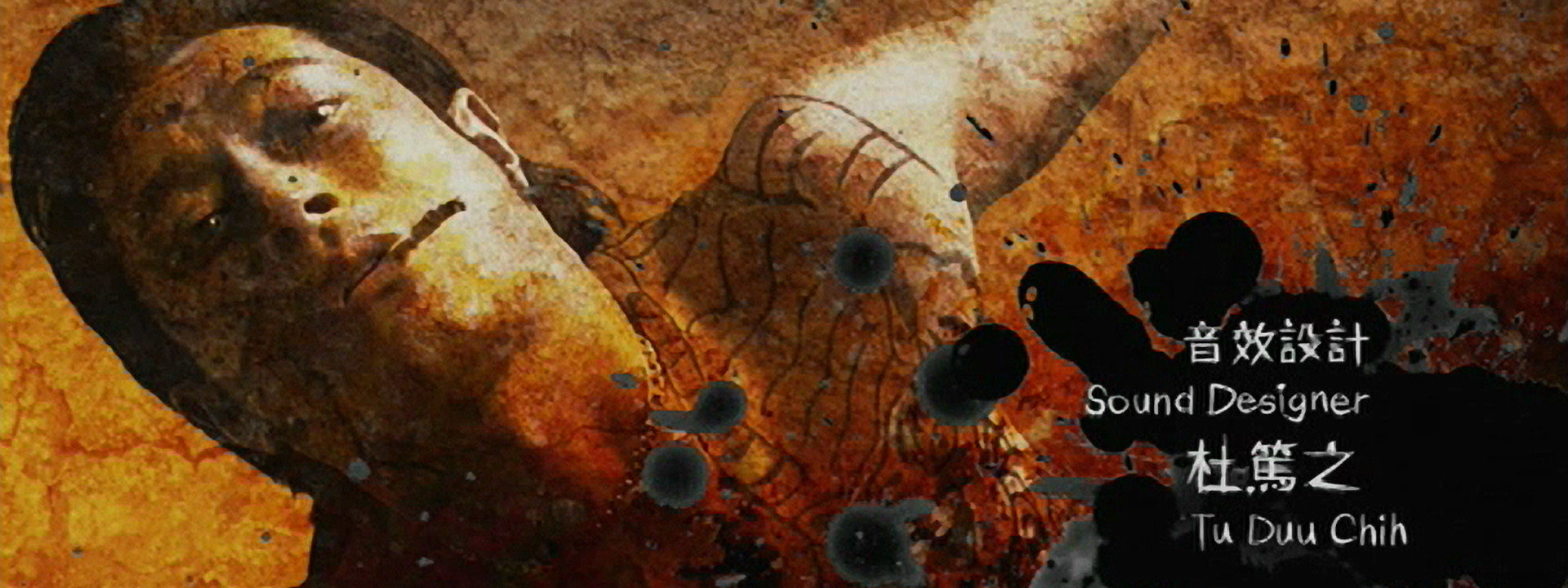

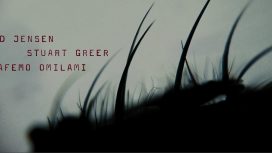
The title sequence of Run, Papa, Run revolves around the recurrent nightmare of the main character, Lee Tin-Yun (played by Louis Koo), whose dark and haunted dream world is filled with symbolic references to his deepest fears. Without explicitly spelling it out, the dream sequence tells the audience something about the state of mind of the protagonist, about the choices he made in life – choices that seem to be motivated by fear.
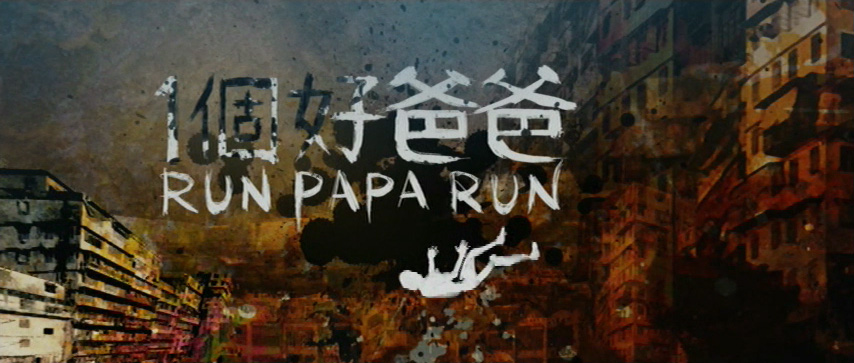
Title designer Henri Wong combined hand-drawn animation, with re-drawn live action footage and photo collage to create the title sequence. “I try to give audiences the feeling of rawness,” says Wong in an email interview, when asked about the expressionistic animation style he employed. ”It is brutal, unembellished, barbaric and rough, and hopefully can connect audiences to the main idea – fear and violence.”
The movie takes place in Kowloon Walled City – a former small Chinese enclave in the middle of the city of Hong Kong. This infamous city within a city also appears in the dream sequence. “Kowloon Walled City was a place where the mob was rooted a long time ago, and it is also the place where our protagonist grew up,” explains Wong.
Wong sheds some light on the story that unfolds in the dream sequence: “The protagonist has nightmares every night and imagines himself being attacked by a demon … He falls from Kowloon Walled City into a red stream. The red stream, representing the restless life of a mobster, traps our protagonist. Later on, he finds himself involved in a car accident – an actual plot in the feature film.”
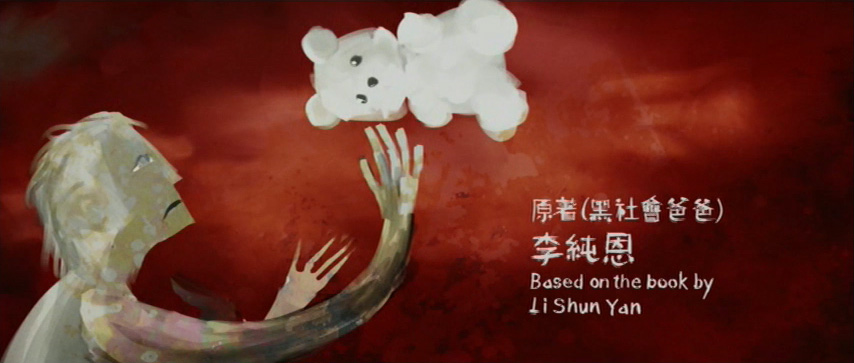
“The protagonist continues to fight with his demons but fails, due to his unstable life and the handcuffs – a symbol of the police. Fortunately, he grabs a life-saving rope to hang on to. However, Emperor Guan, the statue with the giant blade, which represents the code of brotherhood and righteousness in Chinese culture, does not save him from danger, but instead cuts his life-saving rope. His daughter, depicted as a toy bear, represents the protagonist’s hope.”
“The live action sequence at the end resembles reality. The protagonist is no longer in a nightmare. A shot to his chest ended his life. The movie, in effect, is an extended flashback of his life. His spirit narrates his life story at his funeral.”
Asked whether the live action scenes were shot especially for the title sequence, Wong replies: “Of course … The director, Sylvia Chang, had actually given me the chance to direct the live action scenes of title sequence.”
Article: Remco Vlaanderen, © Submarine Channel, 25 November 2008.
Year of production
2008
About Henri Wong
Born and raised in Hong Kong, Henri Wong studied Creative Media at the University.
Full credits
Title designer
Henri Wong / Parabucks
Director (film)
Sylvia Chang